Quick answer
How do income tax and wealth tax differ?
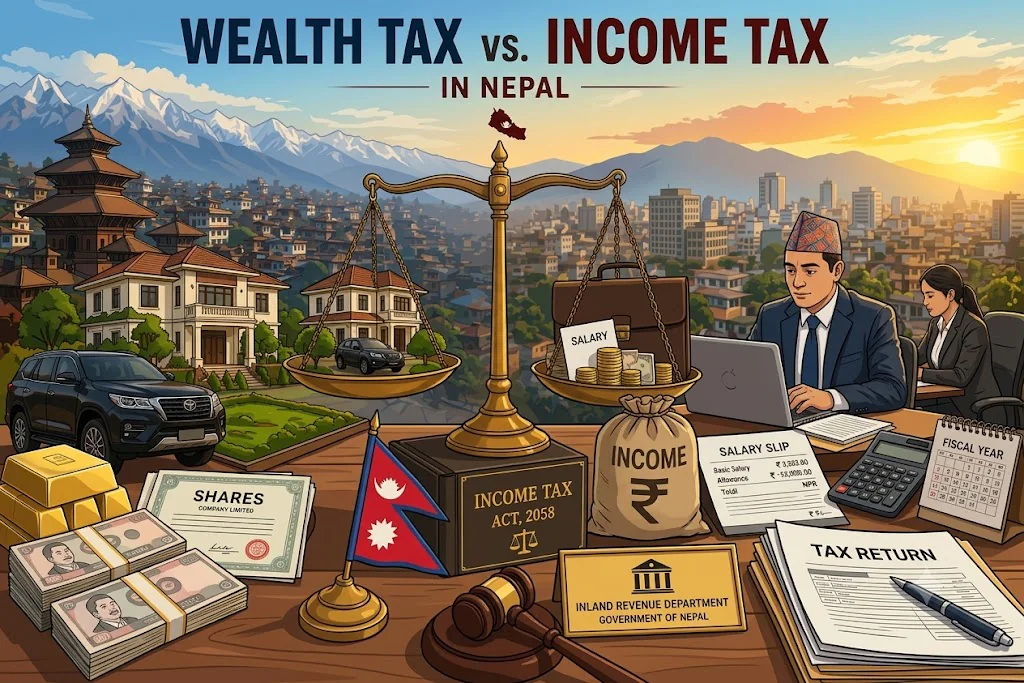
Income tax generally applies to income received during a tax period. A net wealth tax would instead measure the value of covered assets after permitted liabilities at a stated valuation date. Any national wealth-tax proposal in Nepal would require legislation that defines the tax base, valuation method, threshold, exemptions and review process.
- Separate an existing tax rule from a proposal for future legislation.
- Check which level of government has authority over the asset or tax under discussion.
- Do not estimate liability without a defined tax base, valuation date and permitted deductions.
What does income tax measure?
Income tax examines taxable income for a stated period. The records may include employment income, business income, investment income, deductions, withholding and payments.
What would a wealth tax measure?
A net wealth tax would examine covered assets and permitted liabilities at a valuation date. The legislation would need to state which people and assets are covered, how assets are valued, which liabilities may be deducted and what threshold or exemptions apply.
Why are valuation and ownership records important?
Land, private-company shares, financial assets and property may use different records and valuation methods. A workable tax would also need rules for beneficial ownership, jointly held assets, disputed valuations and assets outside Nepal.
What legal questions would a proposal need to answer?
- which government has authority to impose and administer the tax;
- how the law avoids taxing the same base twice;
- which valuation evidence a taxpayer must retain;
- how a taxpayer can challenge a valuation or assessment; and
- when the tax becomes due.
This page explains the policy distinction. It does not state that Nepal currently imposes a national net-worth tax.